
Building Logistics Tech For Humanitarian Aid
Founders Factory Startup Bulletin #64

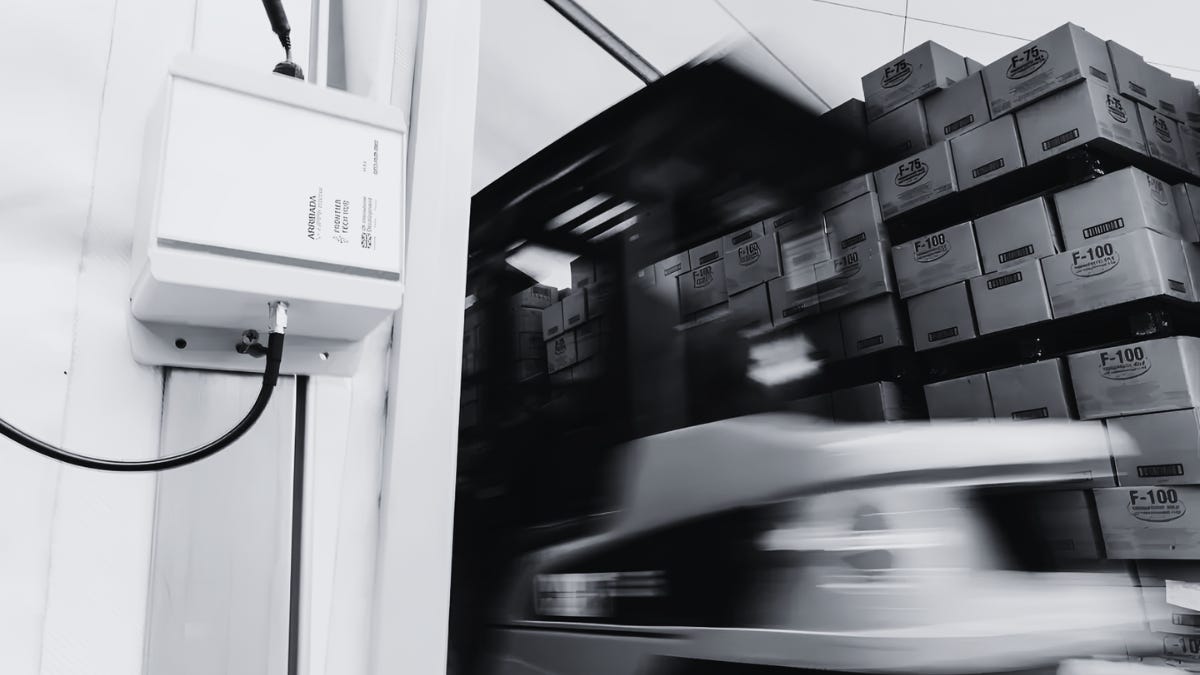
There is no harder space to run logistics than a warzone – but not just because of flying shrapnel or roads disrupted by fallen concrete. Before getting to that point there’s tracking cargo without connectivity as it passes between organisations on the ground or even before that, distributing the funding to run aid to those who need it.
These are just the headline challenges while the need for aid isn’t getting smaller. An estimated 305 million people around the world required humanitarian assistance in 2025 according to OCHA’s Global Humanitarian Overview, with 120 million forcibly displaced – an increase for the 12th consecutive year.
That need isn’t being met either. Only 59% of aid reached its target destination last year, a 40% drop, the UNRIC found, between 2024 and 2025. All in the wake of mass cuts to humanitarian aid from governments and philanthropists in recent years.
In this month’s bulletin we look at the opportunity for logistics startups to deliver breakthroughs in humanitarian aid.
Also in the Bulletin:
Building Logistics Tech For Humanitarian Aid
Meet the Northwestern Medicine Healthcare Cohort
Who raised in July
Matricis.ai’s Elise Guillaume-Mekkaoui on diagnosing endometriosis
ACUA partnership
Programme openings
Job openings
The humanitarian last mile
NGOs are focusing their efforts on the single most critical part of the logistics chain for aid: the last mile (the leg between the final distribution centre and the beneficiary) which is often where things go wrong or missing.
And while there are many differences between humanitarian aid and the system that moves the world’s goods (logistics), the core transport problems are the same. Route optimisation, coordination, visibility, and beneficiary identification are all tasks that need to be carried out whether you’re in South Sudan or Port Jackson Bay.
Humanitarian aid is a key theme in this year’s CMA CGM Awards - where CMA CGM is looking to give startups a live testbed inside one of the world’s largest logistics groups. As part of this year’s competition we look at one of the central themes: the opportunity for logistics startups to deliver breakthroughs in humanitarian aid. Firstly though, let’s look at the obstacles.
Meet the Northwestern Medicine Accelerator Cohort
We’re proud to announce the first cohort of the Northwestern Medicine and Founders Factory healthcare accelerator, as featured in Axios.
The programme connects world-class AI, robotics and healthtech talent from the US and Europe with America’s leading academic health system.
Northwestern Medicine is one of the most respected integrated healthcare systems in the United States with 11 hospitals, over 5,400 affiliated physicians, and 200+ outpatient and diagnostic sites, anchored by Northwestern Memorial Hospital in Chicago.
This accelerator gives founders the chance to test, deploy and scale their technology directly within that ecosystem, unlocking access to the world’s largest healthcare market.
The six companies joining the first cohort:
Uncovr: Transforming how surgery is analysed, documented, coded and learned, capturing the data needed to train models that could eventually enable autonomous procedures. Paris & New York | Founder(s): Ines Iraki | uncovr.ai
Genie Fertility: This AI discovery platform, co-founded by scientists from Cambridge, Oxford and Imperial, unlocks new molecular biomarkers to better understand reproductive health (London, UK) Founder(s): Anoushka Menon | geniefertility.com
Nucleo: Building the infrastructure layer for automated oncology diagnostics, designed to cut time from cancer diagnosis to treatment from ~10 weeks to 10 days. San Francisco | Founder(s): Angelica Iacovelli | nucleoresearch.com
Matricis: A medical-grade AI copilot supporting earlier endometriosis detection by assisting radiologists with pelvic MRI reads. Paris | Founder(s): Raphaelle Taub and Elise Guillaume-Mekkaoui | matricis.ai
Myonerv: A wearable neurotechnology device transforming stroke rehabilitation by monitoring and treating stroke-induced paralysis. Cambridge, UK | Founder(s): Sam Kourosh Kamalin, George Gryparis | myonerv.co
Aykua: Eliminating FMLA, disability and accommodation paperwork for US clinics, automating patient requests, payment processing and medical record analysis. Cambridge, UK | Founder(s): Andrew Kadis | aykua.com
From oncology and stroke rehabilitation to the administrative systems healthcare providers depend on every day, this cohort reflects how AI is beginning to reengineer the entire care continuum. Welcome to all six teams.
July portfolio raises
Valarian raises $50M series A
Valarian has closed an over-subscribed $50 million Series A, taking total funding to $70 million.
Led by New Enterprise Associates, the round was expanded to include strategic investors such as XTX Markets and Palo Alto Networks’ CEO Nikesh Arora.
Valarian’s control infrastructure lets organisations adopt AI without surrendering the data that makes them competitive – one of the most important infrastructure problems currently being solved.
Bondio raises $7.5M
Congratulations to Bondio on closing $7.5M in funding, with the latest round led by Breega alongside Kima Ventures and Motier Ventures.
Bondio connects sellers of eSIMs to mobile networks around the world, building the core infrastructure for the eSIM world.
Founded in 2023, the company is already backed by leading telecoms companies Deutsche Telekom and Telefonica which speaks to the strategic significance of what Bondio is building.
FAST Metals raises a $4.3 million pre-seed
FAST Metals closes $4.3 million in pre-seed funding and announces their first commercial customer, Metalox Mineral Corporation.
More than four billion tonnes of red mud exists globally, containing an estimated $3–4 trillion in metals crucial for defence, manufacturing and clean energy.
FAST Metals’ patented technology de-irons low-grade feedstock, recovering aluminium, scandium, titanium, rare earth elements and other critical minerals from red mud – turning what has long been both a financial burden and an environmental liability into a recoverable, saleable product.
Furbnow closes a $3.3M seed round
Furbnow has closed a $3.3M seed round, led by West Midlands Co-Investment Fund with participation from Nesta, Wrightwood Investments and SFC Capital.
Founded by Becky Lane in 2022 through the Nesta and Founders Factory Mission Studio, Furbnow makes home energy retrofit navigable and trustworthy for homeowners who want to act but don’t know where to start.
The platform acts as an independent advisor, conducting whole-house surveys and connecting homeowners with vetted contractors for heat pumps, solar panels and insulation – removing the friction and confusion that has historically made retrofit one of the hardest consumer decisions in the energy transition.
Fluent raises $2M
Congratulations to Fluent on closing a $2 million raise to bring their low-risk brain-computer interface to more people living with speech impairment.
Fellow investors include the University of Melbourne Genesis Pre-Seed Fund, Pacific Channel, Galileo Ventures, MSWA, and Jumpspace Ventures.
Fluent’s technology sits above the motor cortex, outside the skull, and uses machine learning to convert brain activity into text or audio. By avoiding the complex surgery required for traditional implanted electrodes, the team has developed an approach that matches the signal quality of more invasive methods while being significantly more accessible.
Chiron raises a $1.2M seed round
Chiron raised a $1.2M seed round, led by THENA Capital with participation from Arāya Ventures.
Founder Carron Manning and team are building the intelligence layer for personalised self-management, enabling healthcare providers to deliver continuous, adaptive care beyond the clinic.
Their platform combines electronic health records, wearable data and patient-reported outcomes to build and refine personalised self-management programmes for every individual, giving clinicians a continuous window into what happens between appointments.
Matricis.ai’s Elise Guillaume-Mekkaoui on diagnosing endometriosis
Endometriosis affects one in 10 women worldwide, yet the average patient waits between seven and 10 years to receive a correct diagnosis.
Elise Guillaume-Medkkaoui, co-founder and COO of Matricis.ai, is a patient herself. Her own diagnostic journey is what drove her to build a company around closing the gap.
Endometriosis takes too long to diagnose
Endometriosis is a condition in which tissue similar to the lining of the uterus grows outside it causing chronic pain, heavy periods, fatigue and in many cases infertility. Its symptoms are often dismissed as normal menstrual discomfort and its presentation on imaging is easily missed.
The result is a diagnostic odyssey that affects millions of women and years of living with a condition that could have been identified and managed far earlier.
The gold standard for endometriosis diagnosis has historically been the invasive laparoscopic surgery. MRI offers a non-invasive alternative, but reading pelvic MRI for endometriosis reliably is difficult.
Meet Matricis.ai
Matricis.ai is an AI companion for radiologists reading pelvic MRI, surfacing the signs of endometriosis earlier, more consistently and with greater confidence.
The algorithm is already built. Matricis.ai is now focused on deployment - understanding how large hospital systems work, how to navigate procurement and pricing in markets like the US, and how to get the technology into the hands of the radiologists who need it.
Through the Northwestern Medicine and Founders Factory Healthcare Accelerator Matricis.ai is accessing the US hospital network it would otherwise take years to build independently.
Change is here
Endometriosis has been chronically underfunded and underresearched relative to its prevalence, but that is beginning to change
Matricis.ai is getting a validated, ready-tool into the systems and workflows that can put it in front of the patients who have been waiting decades.
ACUA Ocean partnership
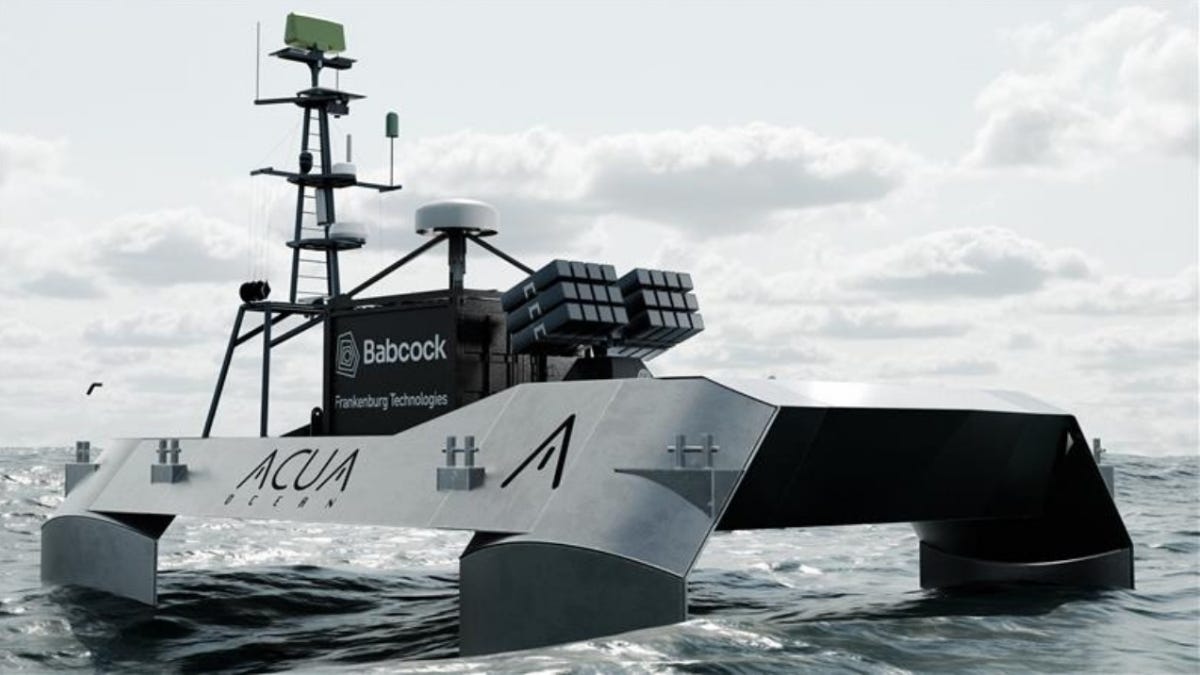
ACUA has signed a memorandum of understanding with Babcock and Frankenburg Technologies to explore integrating low-cost precision missiles onto uncrewed surface vessels, creating persistent, affordable counter-drone capability for the maritime domain.
The agreement brings together Babcock’s multi-domain launcher system, Frankenburg’s mass-manufacturable interceptor missiles, and ACUA’s Pioneer-class uncrewed surface vessels.
The Pioneer recently operated 16 to 20 nautical miles offshore for more than 100 hours without hands-on intervention. This kind of seakeeping stability makes the concept viable in the rough weather conditions where conventional systems fail.
This partnership could see persistent armed pickets holding station offshore in sea states that normally defeat traditional platforms. The vehicles can be used to protect ships, ports and critical maritime infrastructure against mass drone attacks, closer to the cost of drones themselves.
Programme Openings
CMA CGM Startup Awards 2026
A live testbed inside one of the world’s largest logistics groups. 1,000 warehouses, 650+ vessels, 420 ports. Winners get funded commercial deployment, 12 months in ZEBOX, and direct access to CMA CGM decision-makers. Looking for startups with traction in smart transport, AI operations, next-gen media or the future of work.
🕒 Deadline: 7 August | 👉 Apply here
Job Openings
🛡️ IndustrialShield (UK or Australia)
Heat stress causes 277,000 injuries and 230 deaths a year in the EU alone. Silica dust kills around 500 construction workers annually in the UK. Both risks are still managed through static monitors and gut instinct.
We are building a single chest-worn clip of three sensors and one device that tracks particulate, gas, heat and physiological strain together for the first time, turning continuous worker exposure into actionable risk profiles. The partner sensor stack is an unfair advantage no rival can assemble. Early conversations with major miners: “I haven’t seen it in one unit before.”
For a founder who wants to build the workforce-risk operating system for heavy industry.
🔬 Slidestream (Bengaluru/Bangalore, India)
Asia has 6.8 pathologists per million people. North America has 49. The blood smear frontline test for anaemia, leukaemia and infection is still read by eye in tier-2 and tier-3 India, or not read at all.
We are building a sub-€4k scanner that photographs the slide, flags abnormal cells with on-board AI and routes cases to a remote specialist (offline, no cloud dependency). The device is already built and CDSCO-cleared by our partner, with 5,000+ annotated training data points and two years of development already done. Ranked the number one concept by two independent investors.
For a founder who wants to bring diagnostic pathology to the next billion patients.
🤖 NightWatch (Chiacgo, Austin, Houston, United States)
Around 80% of falls in senior living happen in the window right after a nurse’s check wakes the resident. The check causes the harm it exists to prevent.
We are building a mobile UWB-radar robot that patrols corridors at night, senses through doors and walls, and alerts staff only when a physical check is genuinely needed. No cameras. No wearables. No per-room installation. Robot-as-a-service with a two-to-three-month payback. The robotics stack, navigation software and sensing IP are already live in-market with a paying customer through our partner.
For a founder who wants to build the automation layer for how America ages.
All three roles come with €275k in capital, a full-time venture builder, hands-on studio support across product, AI, fundraising and growth and warm routes into the buyers that matter most.
This is your company. We’re here to help build it.
The Northwestern Medicine accelerator model is such a smart structure, giving founders access to a network they'd otherwise take years to build independently instead of just capital. http://Matricis.ai going from a personal diagnostic journey to a company built to close that exact gap is a great example of founder-market fit